Generate Electricity at Home
Solar Panel Installation Leicester
Find out whether your roof is suitable for solar.
Generate Electricity at Home
Find out whether your roof is suitable for solar.
Solar photovoltaic panels generate electricity from daylight, helping homeowners use less electricity from the grid when their system is producing power. At Heat Pumps Leicester, we help customers consider the practical details of rooftop solar, including roof space, direction, shading, electricity use and the equipment needed.
We cover Leicester and surrounding towns, where homes range from traditional terraces and semis to larger detached properties and newer developments. Each roof is different. Rather than promising a fixed saving, we encourage homeowners to look at expected generation, installation costs and how much of the electricity they are likely to use.
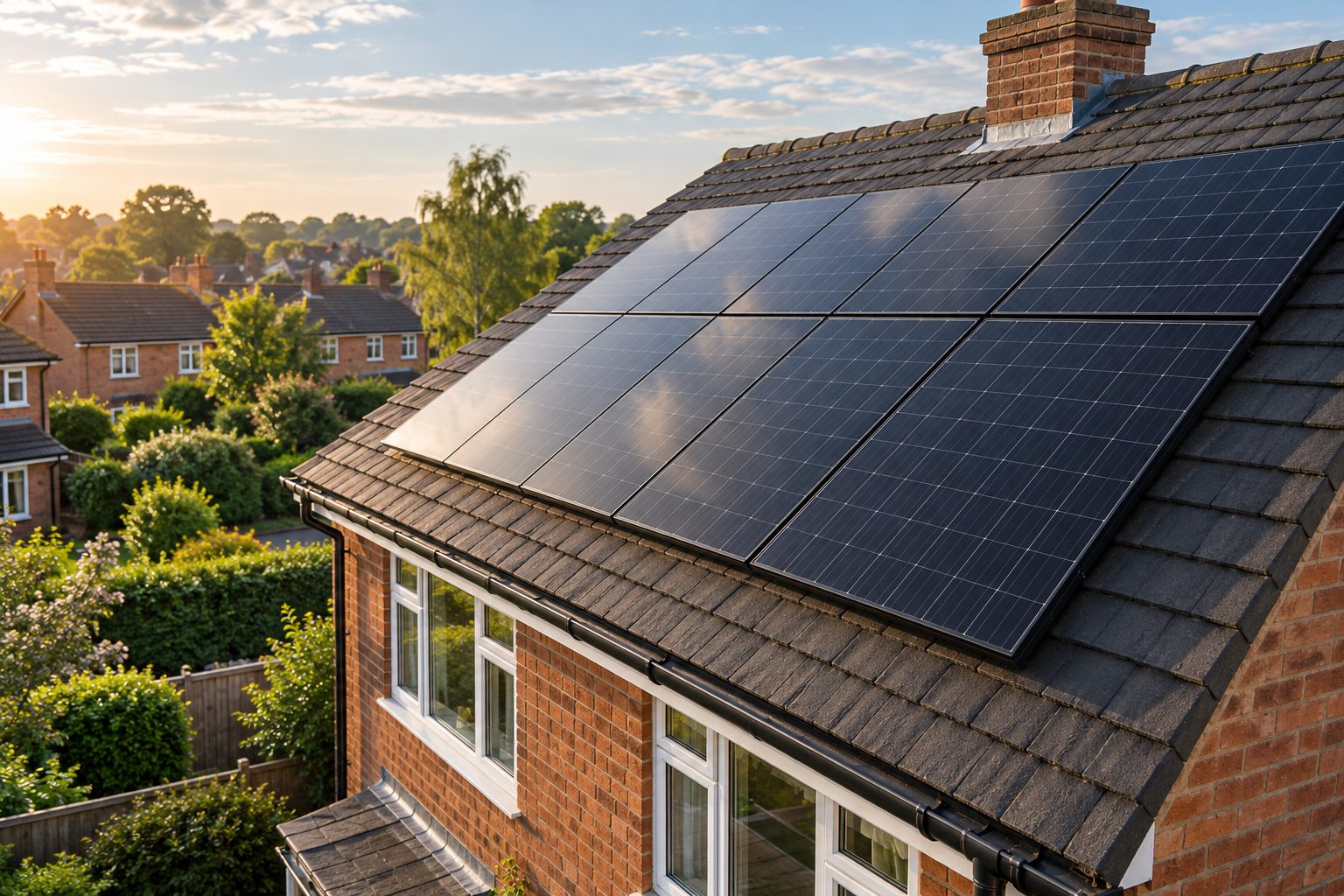
A solar installation should start with the roof and the household's electricity needs. A south-facing roof without major shading can offer strong generation potential, but east- and west-facing roofs can also be useful, particularly where electricity is needed at different times of day. The design needs to consider roof condition, usable area, chimneys, dormers, nearby trees and safe installation access. A larger system is not always the most economical choice, and some properties have physical or electrical limits that need addressing. We help explain the information required for a meaningful solar proposal, including expected annual generation, inverter options and the way electricity will be used or exported.
The roof must be suitable for the proposed mounting system and capable of supporting the installation. Its age, condition and available space all matter, as do surrounding buildings and trees. Solar panels still generate electricity on cloudy days, but shading can reduce performance. If the roof needs major repairs soon, it may be sensible to address those first. A proper assessment should identify whether the proposed system is worthwhile and what preparation may be needed.
Solar systems are commonly described by their peak generating capacity in kilowatt-peak, or kWp. A larger system can generate more electricity when conditions allow, but its value depends on how much power your home uses and when. We consider whether you work from home, use electricity during the day, have an electric vehicle or run a heat pump. These details help explain whether a proposed system is appropriately sized and how much electricity might be used directly rather than exported.
Solar panels produce direct-current electricity. An inverter converts that electricity into a form suitable for normal household use. The design also includes mounting equipment, wiring, protection devices and monitoring arrangements. Different inverter arrangements may be appropriate for different roofs. Partial shading, multiple roof directions and future battery plans can influence the decision. We explain equipment choices in practical terms rather than assuming the most complicated specification will automatically provide the best result.
An air source heat pump uses electricity to provide heating and hot water. Solar panels can contribute to that electricity demand when they are generating, although winter solar production is considerably lower than summer production. The important question is how the household uses electricity over the year. Solar panels will not usually cover all winter heating demand, but they may support overall electricity use and other appliances. We encourage realistic estimates rather than claims of free heating throughout the year.
If your solar panels produce more electricity than your home needs, the excess may be exported to the grid. Export payments depend on the eligibility requirements and tariff you arrange with an electricity supplier. The installation also needs appropriate electrical network notification or approval. Once operating, monitoring can help you see generation patterns and identify unusual changes in performance. Solar panels generally require limited routine attention, but inspections, electrical safety and eventual inverter replacement should be considered.
| Service | Estimated Cost | Average |
|---|---|---|
| Typical domestic rooftop solar PV system | Depends on system size and roof | Around £7,600 UK typical cost |
| Roof access and scaffolding | Subject to installation requirements | Varies |
| Additional electrical alterations | Subject to assessment | Varies |
| Optional battery storage | Quoted separately | Depends on capacity |
The average figure is general UK guidance rather than a Heat Pumps Leicester price. Roof complexity, system capacity, equipment and installation access affect the final quotation. The Boiler Upgrade Scheme does not provide a standard standalone solar panel grant.
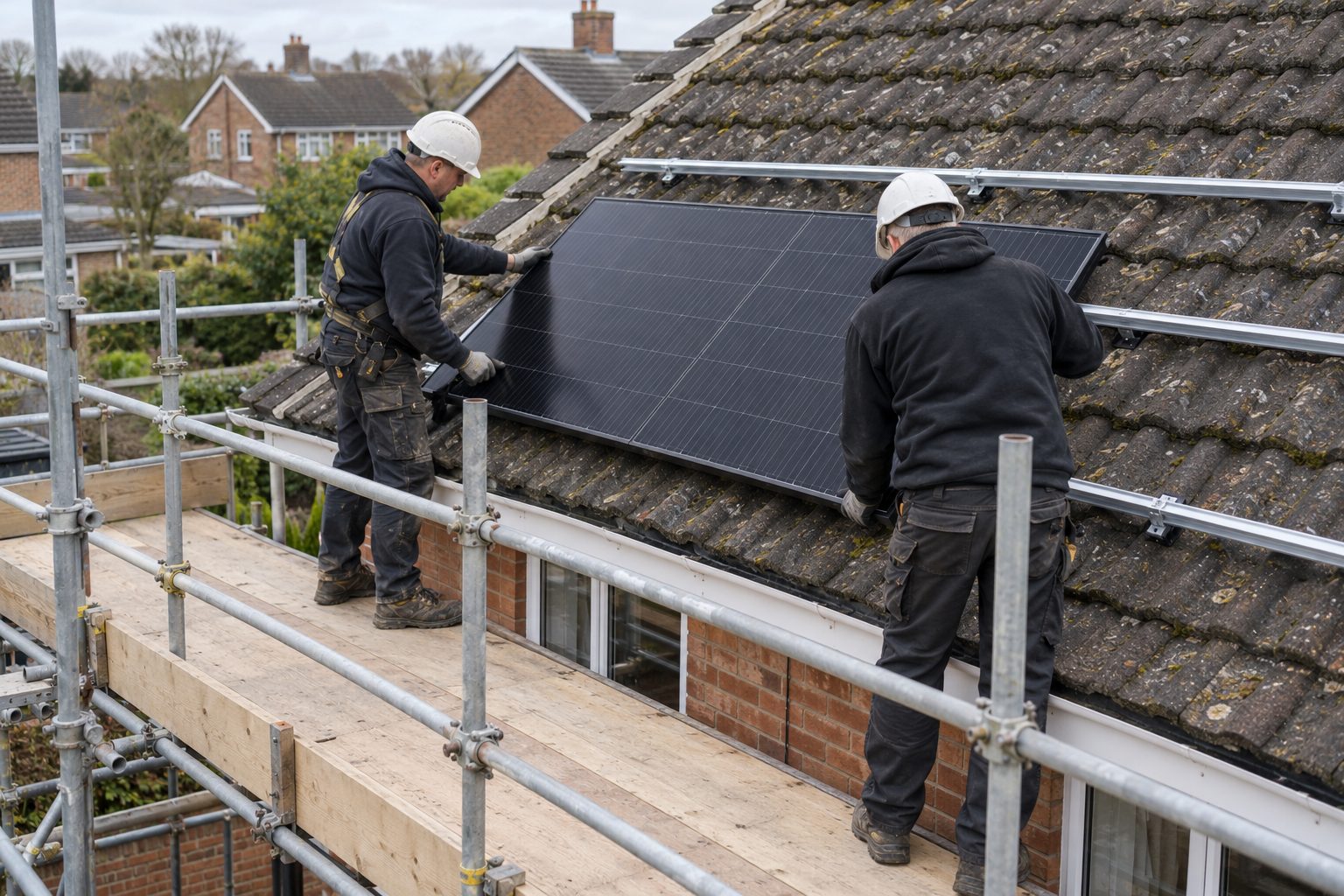
We focus on roof suitability and shading before discussing how many panels to install.
We consider how and when your household uses electricity so the system has a clear purpose.
We explain the role of panels, inverters and optional batteries without unnecessary jargon.
Expected electricity production and financial benefits should be calculated using your property and energy circumstances.
Interested in solar panels for your Leicestershire home? Tell us about your roof and electricity use.
Free — no obligations
We discuss your property, roof direction, visible shading, energy use and installation goals.
The roof, electrical arrangements and expected generation are considered in more detail.
The recommended system, equipment, scope and estimated generation are presented for review.
Safe roof access, electrical work, network requirements and relevant permissions are addressed.
The operating information and monitoring arrangements are explained so you can understand how the system performs.