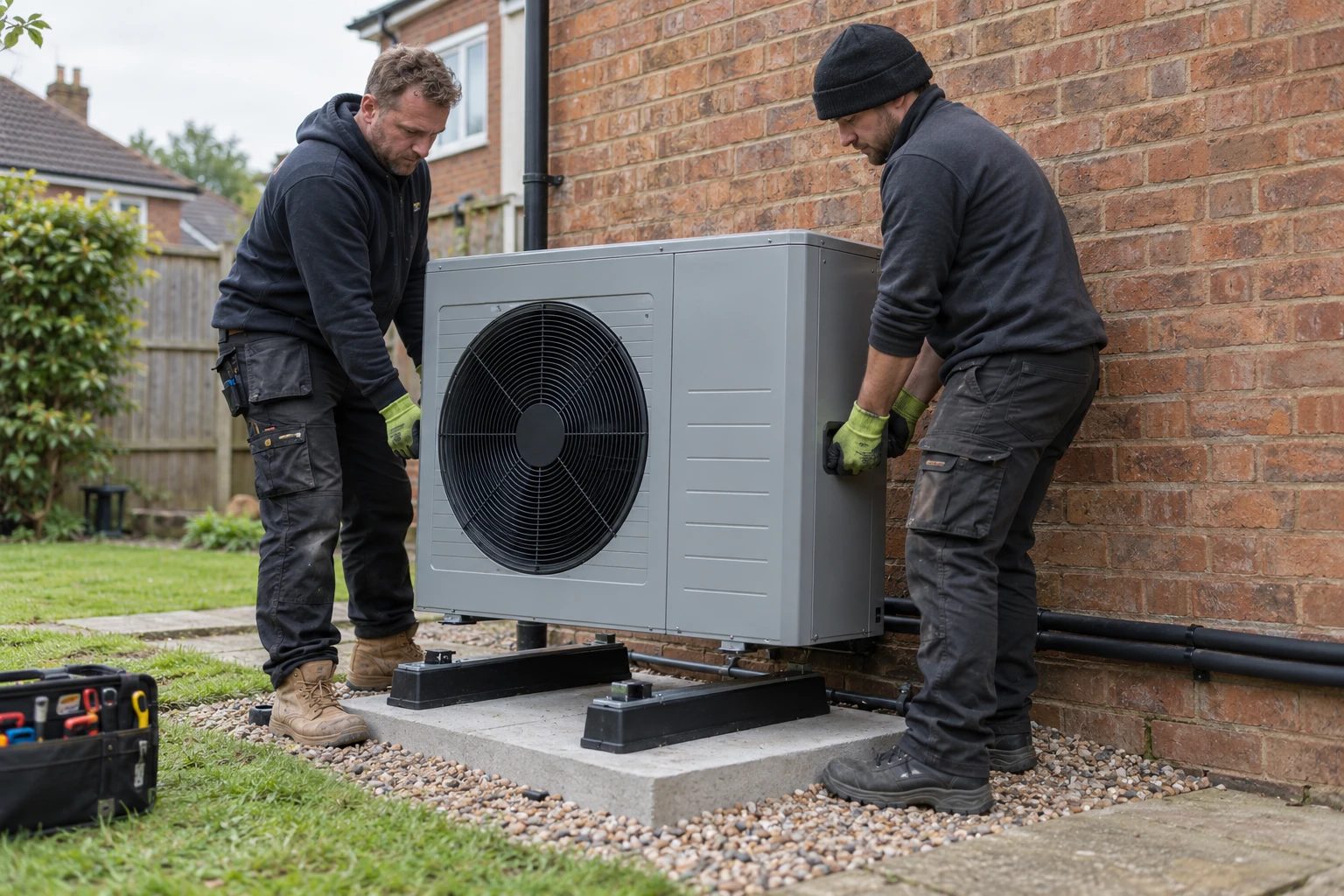
Store More of Your Home Energy
Solar Battery Storage Leicester
Explore a battery system suited to your electricity use.
Store More of Your Home Energy
Explore a battery system suited to your electricity use.
A home battery stores electricity so it can be used at a different time. When connected to solar panels, it can capture some of the electricity your panels generate during the day and make it available later. Depending on the equipment and electricity tariff, batteries can also charge from the grid when prices are lower.
At Heat Pumps Leicester, we help homeowners understand whether storage fits their existing solar system, energy use and budget. Battery size, compatibility, location and intended use matter more than simply choosing the largest available unit. We explain what a battery can realistically do, including the limits of storage during winter and during a power cut.
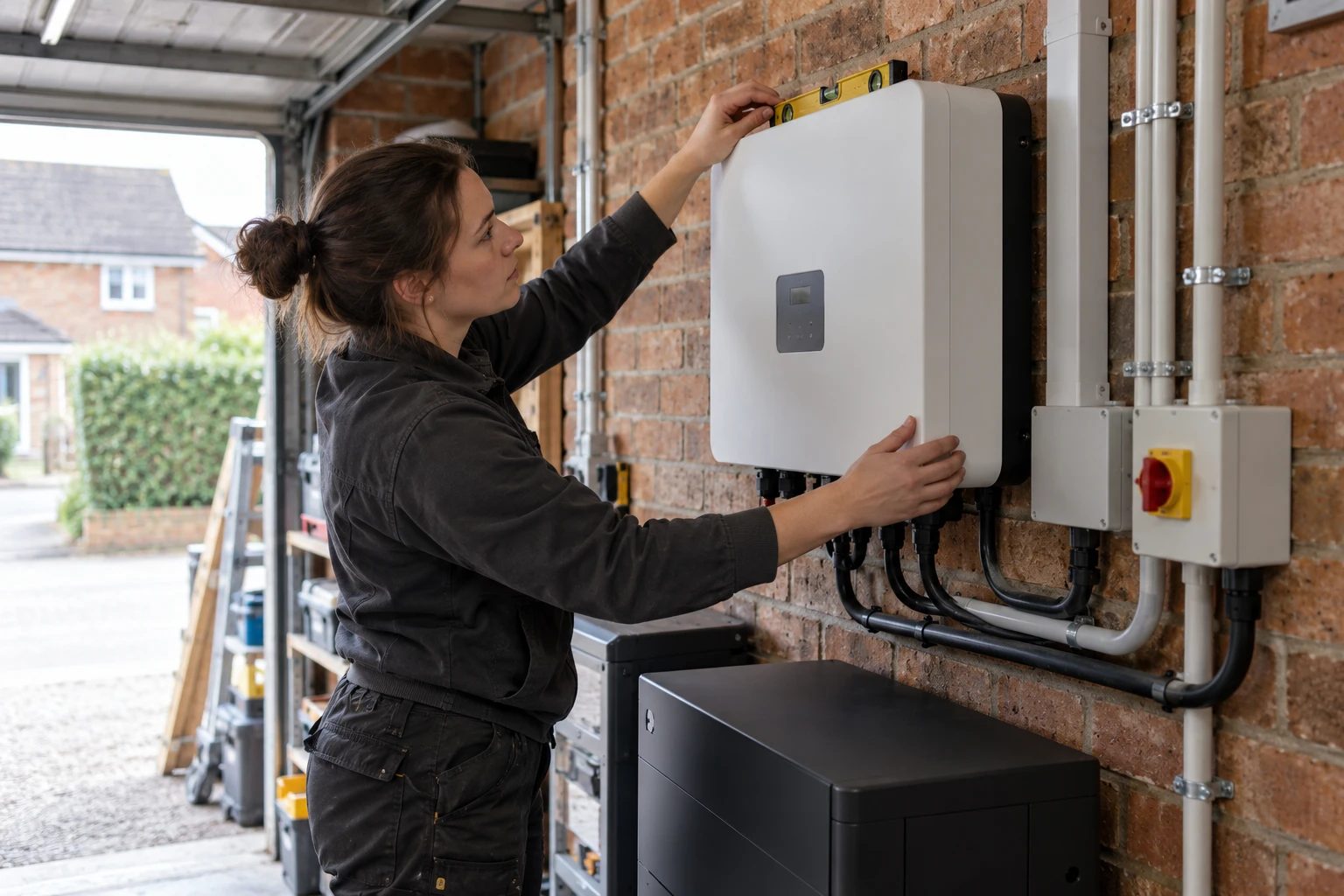
Battery storage can increase the amount of solar electricity you use in your own home. Without a battery, unused solar generation may be exported to the grid. With a suitable battery, some of that energy can be stored for the evening or another period when your panels are producing less. A battery may also be useful for households on compatible time-of-use electricity tariffs, even without solar panels. However, the financial benefit depends on import and export prices, charging behaviour, losses and the upfront cost of the equipment. We focus on these practical questions before recommending a capacity or configuration. We also consider whether battery storage should be installed now or left as a future option.
Battery capacity is measured in kilowatt-hours, or kWh. A system that is too small may leave useful solar generation unstored, while a very large battery can cost more without delivering enough extra benefit. We consider typical daytime and evening consumption, existing solar generation and electricity tariffs. The aim is to understand how much energy you could regularly store and use, rather than relying on a battery size based only on the number of bedrooms.
Many existing solar PV systems can be fitted with battery storage, but the correct arrangement depends on the inverter and electrical installation. Some systems use a compatible hybrid inverter, while others can use a separate battery inverter. We look at the existing equipment before discussing suitable options. It is important to check whether adding storage would affect warranties, monitoring, grid arrangements or the performance of the original solar system. A compatibility assessment can avoid unnecessary equipment replacement.
A battery does not have to be connected to solar panels to provide a possible benefit. Some households charge batteries during cheaper tariff periods and use stored electricity when grid prices are higher. This approach depends heavily on the tariff and how consistently the household can use the stored energy. Charging and discharging involve energy losses, and tariff prices can change. We encourage homeowners to compare estimated savings against the purchase price and expected service life before deciding.
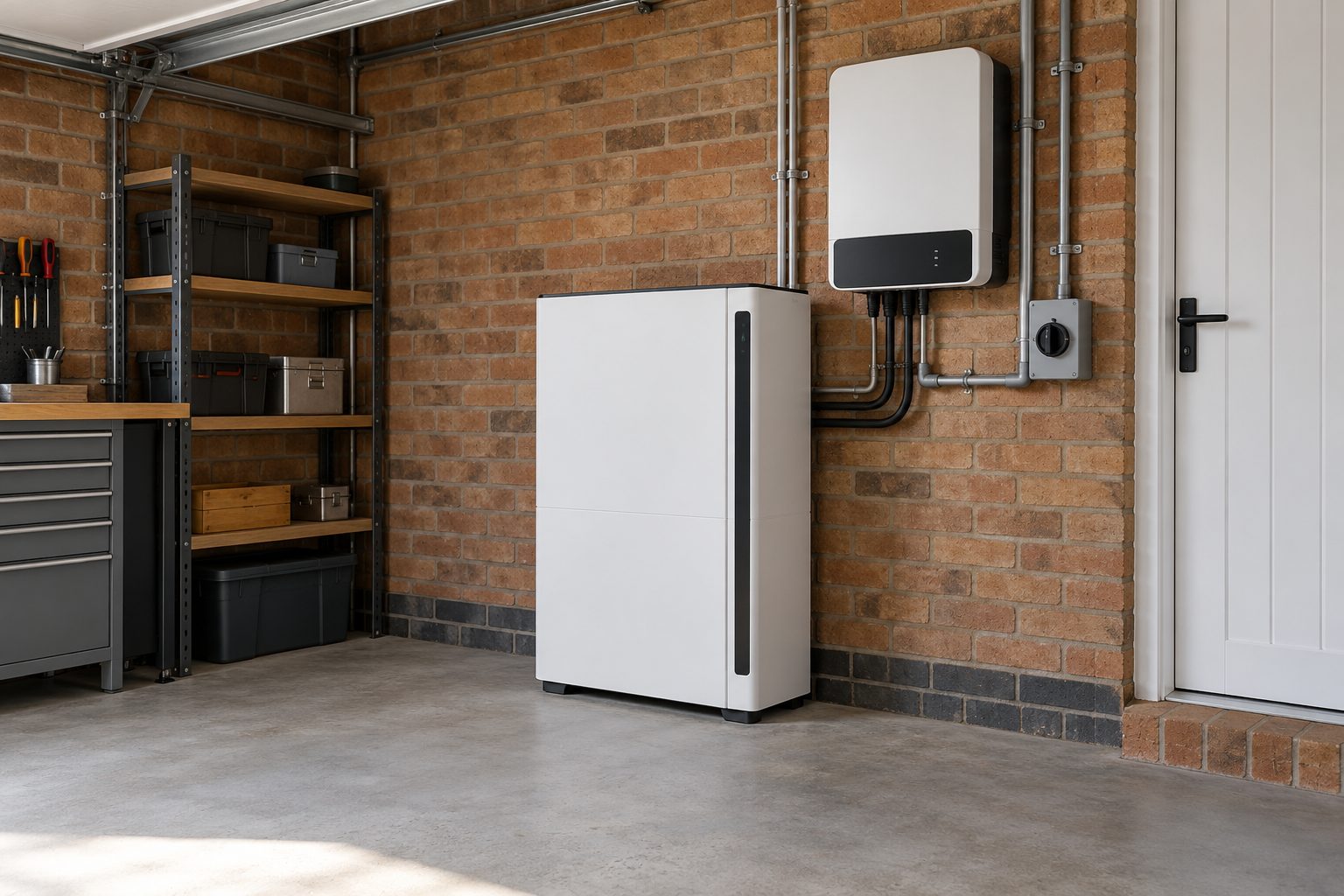
Home batteries need a suitable location with the clearances, environmental conditions and access specified by the manufacturer. Garages, utility areas and approved external positions may be possibilities depending on the equipment. The design must also consider electrical protection, cable routes, ventilation where required and applicable safety standards. Not every cupboard or outdoor wall is suitable. We explain why the location matters and what checks are needed before installation.
A standard grid-connected battery does not automatically keep your whole home running when the electricity network fails. Backup operation normally requires equipment designed and configured for that purpose, and the available power may be limited. Smart controls can help manage charging, discharging and electricity tariffs. We explain the difference between everyday energy storage and emergency backup before you choose equipment, so the system meets your expectations.
| Service | Estimated Cost | Average |
|---|---|---|
| Typical 5 kWh home battery system | Depends on equipment and installation | Around £4,600 UK typical cost |
| Larger-capacity battery storage | Capacity-specific quotation | Varies |
| Existing solar system integration | Subject to compatibility | Varies |
| Optional backup power arrangements | Additional design and equipment | Varies |
Home battery costs vary widely by capacity, manufacturer, compatibility and electrical work. The typical 5 kWh figure is general UK guidance, not a business quotation. Actual savings depend on household consumption, tariff arrangements and system operation.
We consider your household consumption and generation patterns before discussing battery capacity.
We look at existing solar equipment and electrical arrangements to identify what may be needed for integration.
We discuss charging costs, export tariffs and the limits of projected savings.
We explain installation location, protection requirements and whether proposed equipment can provide backup power.
Thinking about adding a home battery in Leicester or Leicestershire?
Free — no obligations

We ask whether your priority is using more solar electricity, time-of-use tariffs or a specific backup requirement.
Solar panels, inverters, electrical supply and available installation space are considered.
We discuss storage needs using household electricity use and potential generation or tariff patterns.
The proposed battery location, protection equipment and electrical work are identified.
Charging, discharging, monitoring, safety guidance and backup limitations are covered at handover.