Solar Panels, Batteries and Heat Pumps in Leicestershire: Do They Work Together?
Solar panels, batteries and heat pumps can complement each other, but they solve different problems. This guide explains how they fit together for a Leicestershire home.
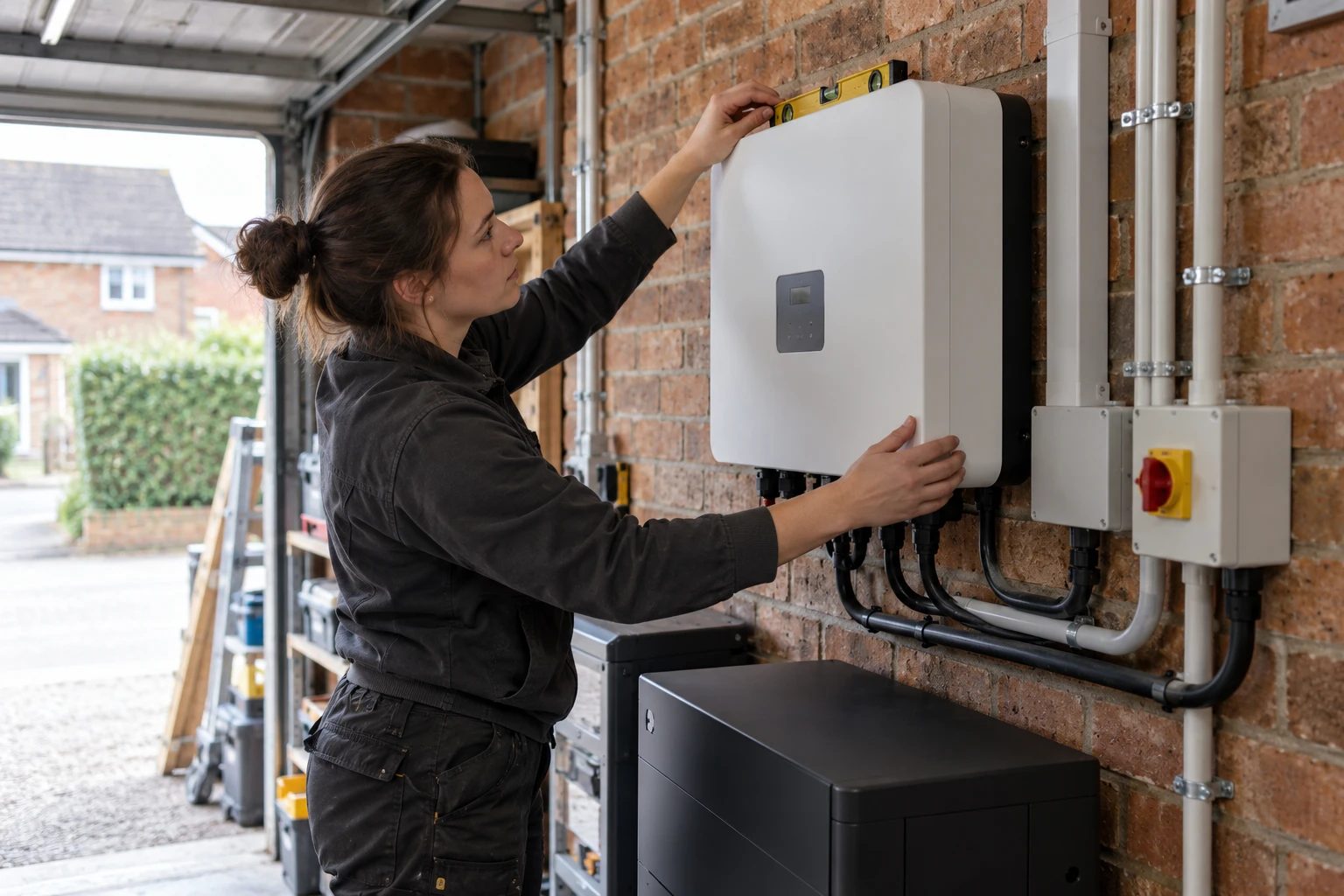
How They Fit Together
A heat pump uses electricity to heat your home. Solar panels generate electricity. A battery stores electricity to use later. Together they can cut the amount of electricity you buy from the grid, but the fit is not perfect, mainly because of the seasons.
The Winter Problem
Solar panels produce most of their electricity between spring and early autumn. A heat pump uses most of its electricity in winter, when solar output in the Midlands is a fraction of the summer level. So solar panels help with the heat pump's hot water demand in summer, but they will not run your heating through January. Anyone who tells you otherwise is overselling.
Where a Battery Helps
A battery stores surplus solar power for the evening. It can also be charged from the grid overnight on a cheaper off-peak tariff, then used to run the heat pump and the house during the more expensive daytime period. That works all year, including winter, and it is often where much of a battery's value comes from.
Exporting Surplus Power
Electricity you do not use or store can be sold to your supplier under the Smart Export Guarantee (SEG). Rates vary a lot between suppliers, so it is worth comparing them once your system is installed.
Costs and VAT
A typical domestic solar PV system costs several thousand pounds, and a home battery adds more on top. Residential solar panels and batteries currently benefit from 0% VAT until 31 March 2027. Unlike heat pumps, there is no national grant for solar panels, although some local schemes exist for eligible households. See our solar panels and solar battery pages for typical costs.
Roofs, Planning and Local Rules in Leicestershire
Most rooftop solar on houses is permitted development, but listed buildings, conservation areas and protected landscapes can have extra requirements. In Leicester itself, planning is handled by Leicester City Council. Elsewhere in the county it is the district or borough council: Blaby, Charnwood, Harborough, Hinckley and Bosworth, Melton, North West Leicestershire, or Oadby and Wigston.
Leicester's housing is dominated by Victorian and Edwardian terraces in areas such as Clarendon Park, Aylestone and Knighton, interwar semi-detached homes in the suburbs, and post-war and modern estates towards the edge of the city. Across Leicestershire, market towns such as Market Harborough and Melton Mowbray have a mix of older brick and stone houses, and many villages have older properties with solid walls. Roof direction, shading from neighbouring buildings or trees, and the condition of the roof all affect whether solar is worthwhile on a particular home.
Which Should You Do First?
- Replacing a failing boiler? Prioritise the heat pump, using the £7,500 grant, and design it so solar can be added later.
- High electricity use and a good south, east or west-facing roof? Solar on its own can make sense, whatever your heating.
- Already have solar? Adding a battery, or a heat pump on a smart tariff, can make better use of what you generate.
- Doing everything? One installer coordinating all three makes the electrics and controls simpler.
Get a free, no-obligation estimate
Tell us about your home and we will pass your enquiry to up to three vetted, MCS-certified partner installers covering Leicestershire.
This guide is general information, not advice for your specific property. Grant rules, prices and tariffs change, so confirm details with your installer and on GOV.UK before committing. See our Disclaimer.